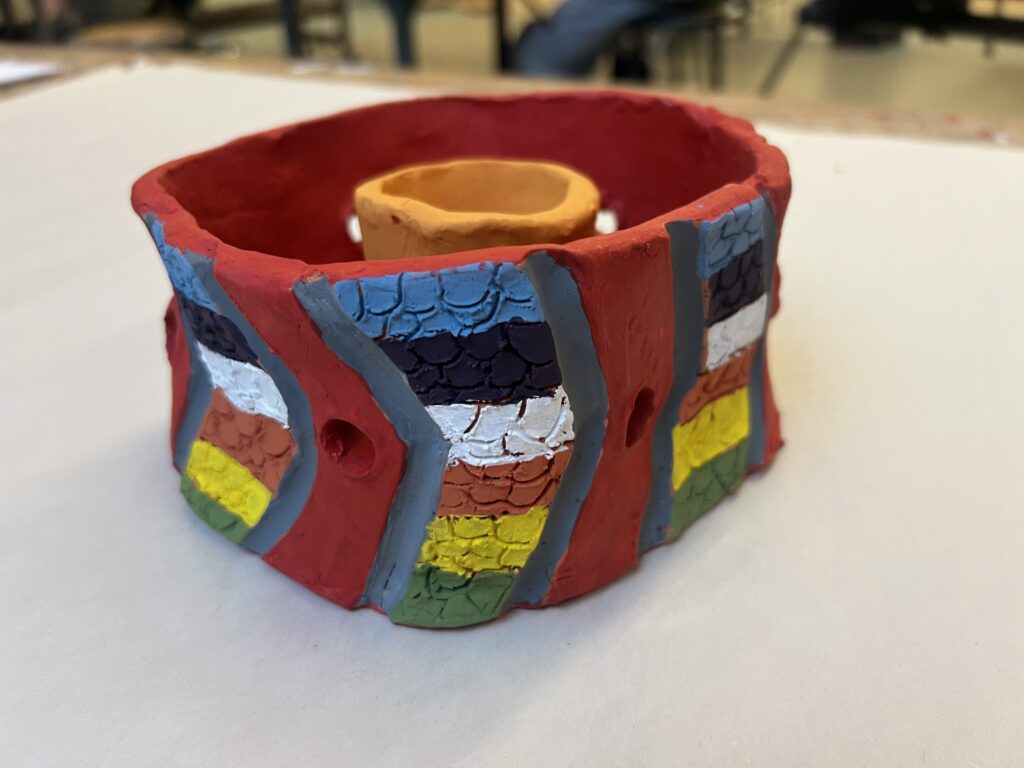
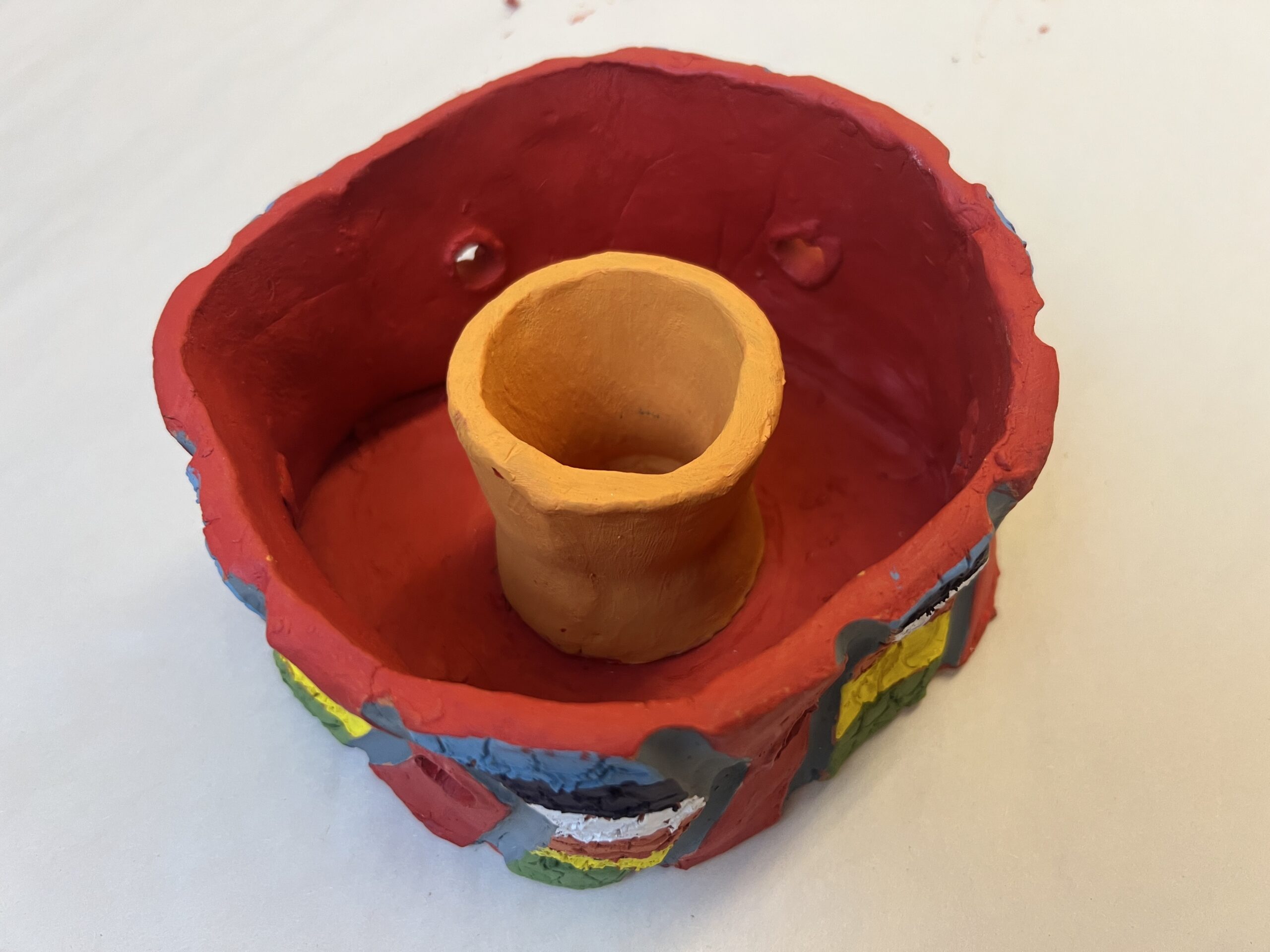
“In this project you will communicate the idea of Kitsch. Create at least 3 multiple size hollow 2-3 ” shapes out of clay. You will be using these multiples and a slab-built clay cylinder/vessel (2.5″ high x 6″ wide) to create your final object as long as the overall composition is Dynamic! Be sensitive to the repetition and gesture of the pieces to direct the viewer’s eye movement throughout the composition.”
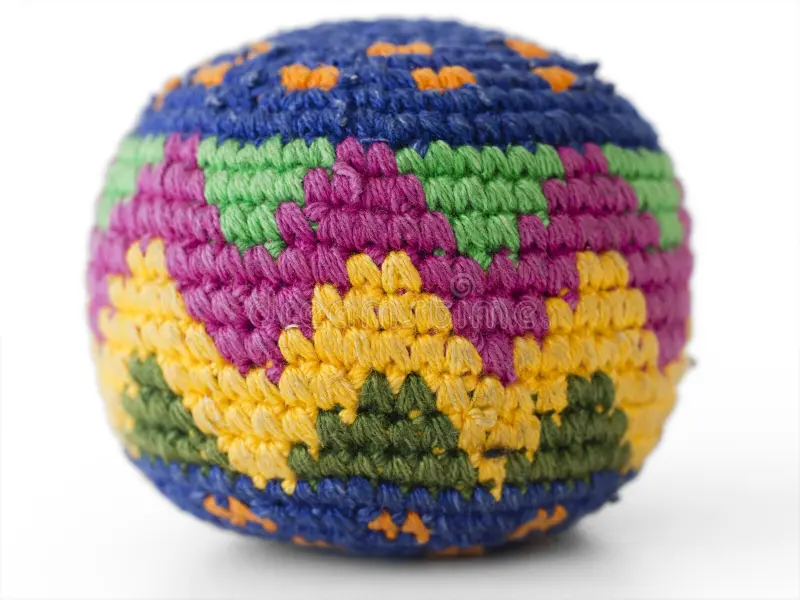
After learning about what a kitsch object was, I took a look around my room and thought about if any of my objects laying around could be classified as ‘kitsch’. I had a model plane in mind, but it was a bit big for the project, similar to a few other items I briefly debated using. I found my hackey sack and thought it would be a fun object to use. I wanted to paint it similar to a design you would typically see on a hackey sack, while also adding a unique element to the form.
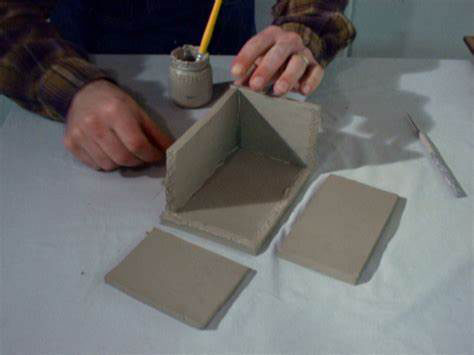
I dove straight into the slab building process and just started experimenting. Although these photos are stock images, it is the same process of slab building that I used. I flattened a clump of clay and cut out a round base, then cut out a long enough piece to go around the edge to fully seal the form. I decided I wanted to add another aspect to my form to make it more dynamic, so I made a cylindrical shape with an open top for my kitsch object to sit on. I thought the mirror of the repeating form of the outer circle and inner circle made for a visually appealing piece.
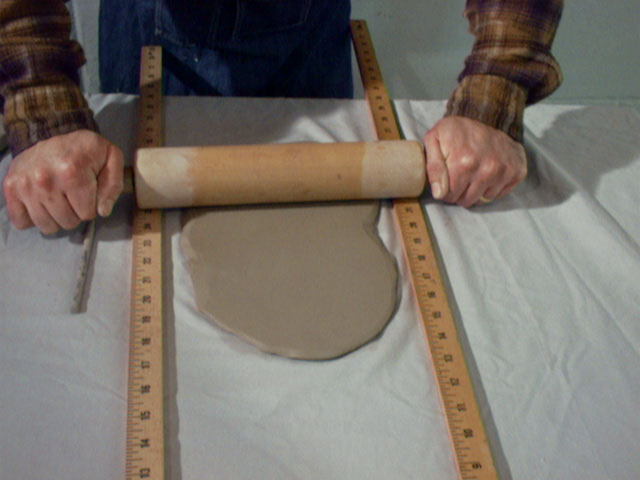
I realized that my form was not looking very dynamic on its own as just a circular form with nothing else to look at. As this was supposed to be something that is interesting to look at without the kitsch object, I came up with the idea of engraving a design into the outer walls. A standard hackey sack will most likely have an interesting pattern on it to look at so I wanted to replicate this.
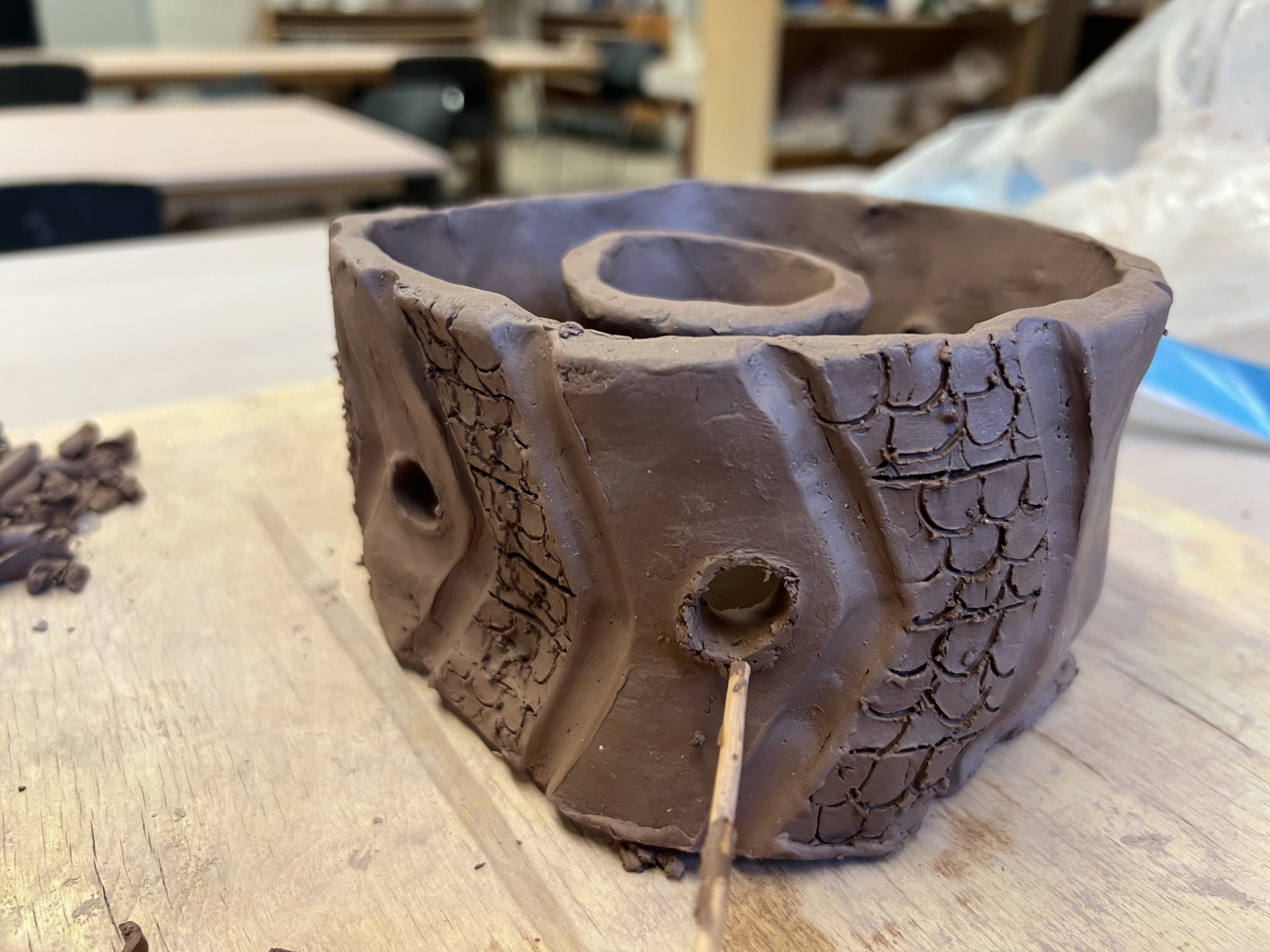
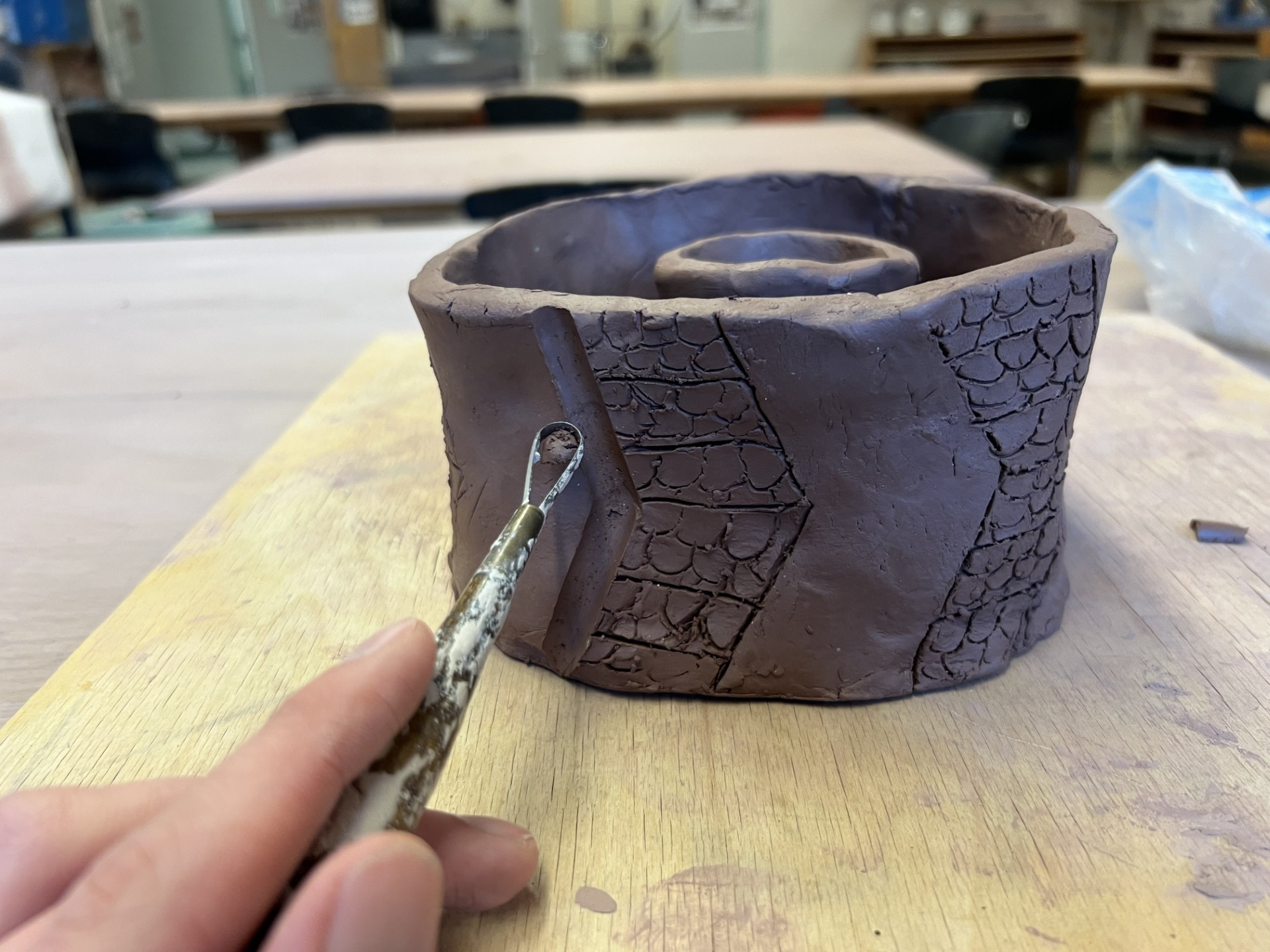
I took the rounded tool and started engraving a zig-zag pattern around the walls of the clay. Most hackey sacks are knit so I took the pointed dental tool and tried to make the form have a knit pattern to it. I think overall this added to the flow of the piece and gave the eye a way to move around it. After I was done engraving, I still was not satisfied with the way it was looking, so I decided to add holes going through the center of the walls in a pattern around the whole form. I think this added a subtle balance to the piece making the outside interesting to look at without the hackey sack itself sitting with the piece. I think the texture from the engraved pattern works well and makes the piece more dynamic, as well as the holes. The holes could have been different scales to make them disproportionate from each other, but I think the relation between the similar sizes and the proximity of the holes to each other works well too. I like how each engraved zig-zag line points to a hole and keeps the eye flowing around the piece.
When adding the paint to my form, I wanted to tie all aspects together in a final way. I decided to pain the textured pattern on the walls in a similar pattern to one you would see on a hackey sack. The reason I chose this object was because it stood out to me just looking at it, and I thought I could replicate that aspect with the way I painted my piece.